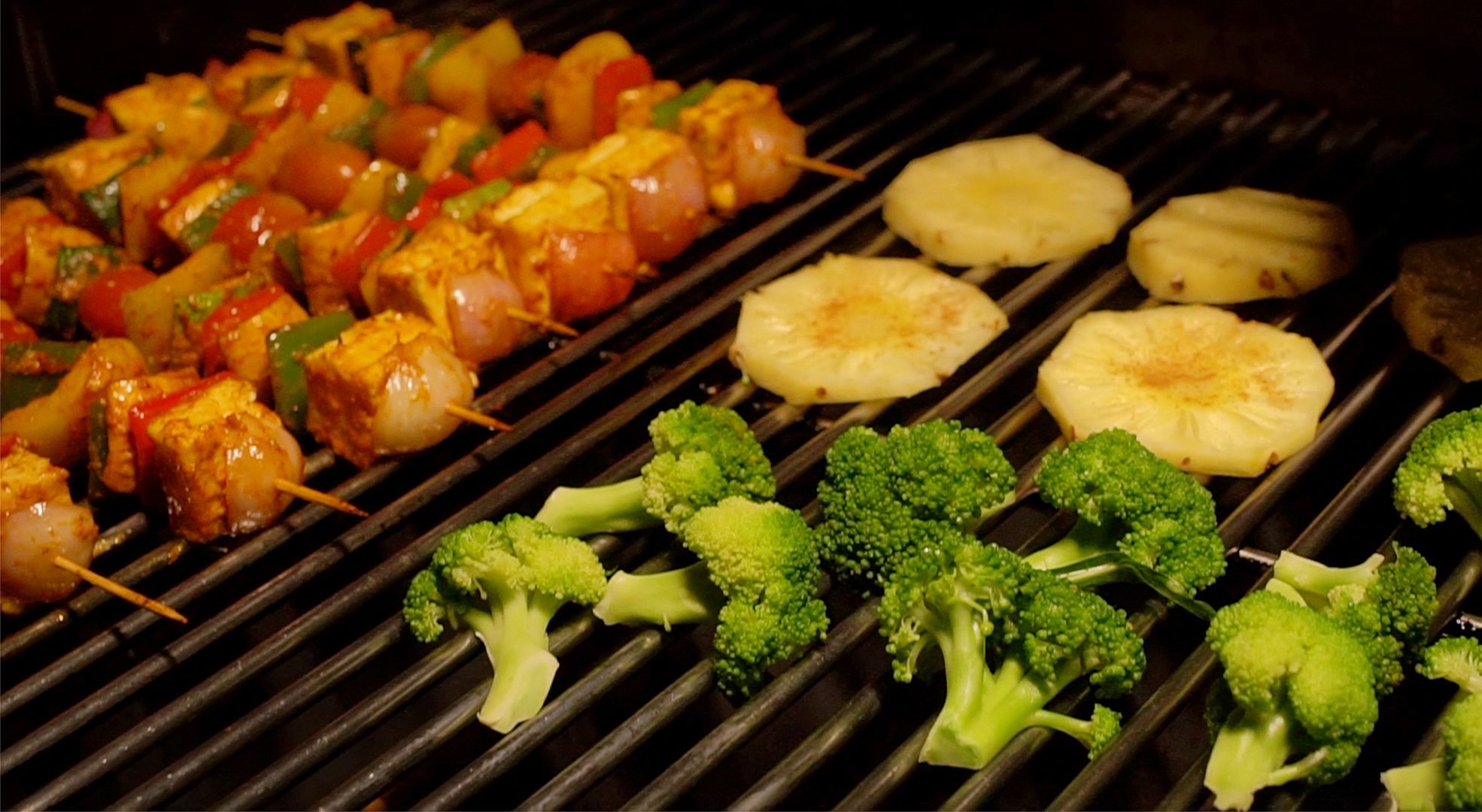
Farm-to-table is a phrase that has been borrowed, stretched, and stuck on menus from cloud kitchens to airport lounges. At Orchid Tree it means something precise: the tomatoes on your plate were likely pulled off the vine this morning on the estate's own farm, supplemented by thoughtful local sourcing. The gap between seed and table here is not just a marketing claim. It is a walk you can take before lunch.
The estate sits in Yelachamanahalli Village, near Hoskote, about forty-five minutes from Whitefield. The kitchen and the farm exist on the same land, which changes how cooking works. When the crop decides what is ripe, the menu follows. The kitchen draws heavily on what the farm offers that day, supported by carefully selected local partners. It is a constraint that produces better food. It is a constraint that produces better food.
What farm-to-table actually looks like here
The estate farm sits about a kilometre from the main house, a working kitchen garden of vegetables, herbs, and seasonal fruit. Guests are welcome to walk down and see it. Children tend to enjoy pulling something from the soil more than they enjoy any menu description of it. The kitchen team knows what was harvested and cooks around it, which means the food changes across the year in ways a fixed menu never could.
This is not a restaurant with a farm-themed aesthetic. It is a farm that happens to have a kitchen. The difference shows up in the texture of a dal, the freshness of a salad, the way a curry smells before the lid comes off. Ingredients that have not travelled five hundred kilometres in a refrigerated truck taste different, and they do.
The cuisines and the cooking style
The kitchen draws from North Indian and Nepali home cooking as its foundation, the kind that takes time and does not rush. Around that foundation, the team layers in touches from Kerala, regional Indian traditions, and occasionally Western technique, wherever it suits what the farm has brought in. The food is not fusion for its own sake. It is home cooking done with good produce, which is the oldest and most reliable approach there is.
How meals work: plated, pre-ordered, never a buffet
Breakfast, lunch and dinner are included with every stay and served fresh. All three meals are plated and cooked in small batches to order. We ask you to pre-order in advance before the kitchen begins. There is no buffet, no warming tray, no food that has been sitting under a lamp since two in the afternoon. When your meal arrives, it was cooked for you, not for a queue.
Pre-ordering is part of how this works well. You can pre-order your meals when you plan your stay, so the kitchen knows what is coming and can prepare with care. It also means that dietary needs, vegetarian, vegan, Jain, or anything else, are straightforward to accommodate. You are not choosing from a set menu at the last minute. You are telling the kitchen what you need, and it cooks accordingly.
The estate is proudly BYOB. There is no in-house bar and no mark-up on bottles. Bring whatever you like to drink, and pour it at your own pace, under the stars if the evening allows. Most guests find this works out considerably better than a resort wine list.
Eating through the seasons
The farm and the calendar are in conversation, and the table reflects it. Mango season brings the fruit into chutneys, lassis, and wherever else it fits before the tree decides it is done. The monsoon turns the estate green and heavy, and the kitchen leans into warming food, long-cooked lentils, ginger, pepper, the kind of cooking that suits grey skies and damp air. Winter evenings call for something different: richer, slower, eaten by the bonfire if the night is cold enough. The same kitchen, the same farm, four distinct moods across a year.
Dietary needs are welcomed, not accommodated reluctantly
Vegetarian, vegan, and Jain meals are a natural part of how this kitchen works, not an afterthought. When you plan your dining ahead of your stay, mention what you need and the kitchen will build your meals around it. Nothing is sourced differently or prepared with less care.
Dining as part of the stay
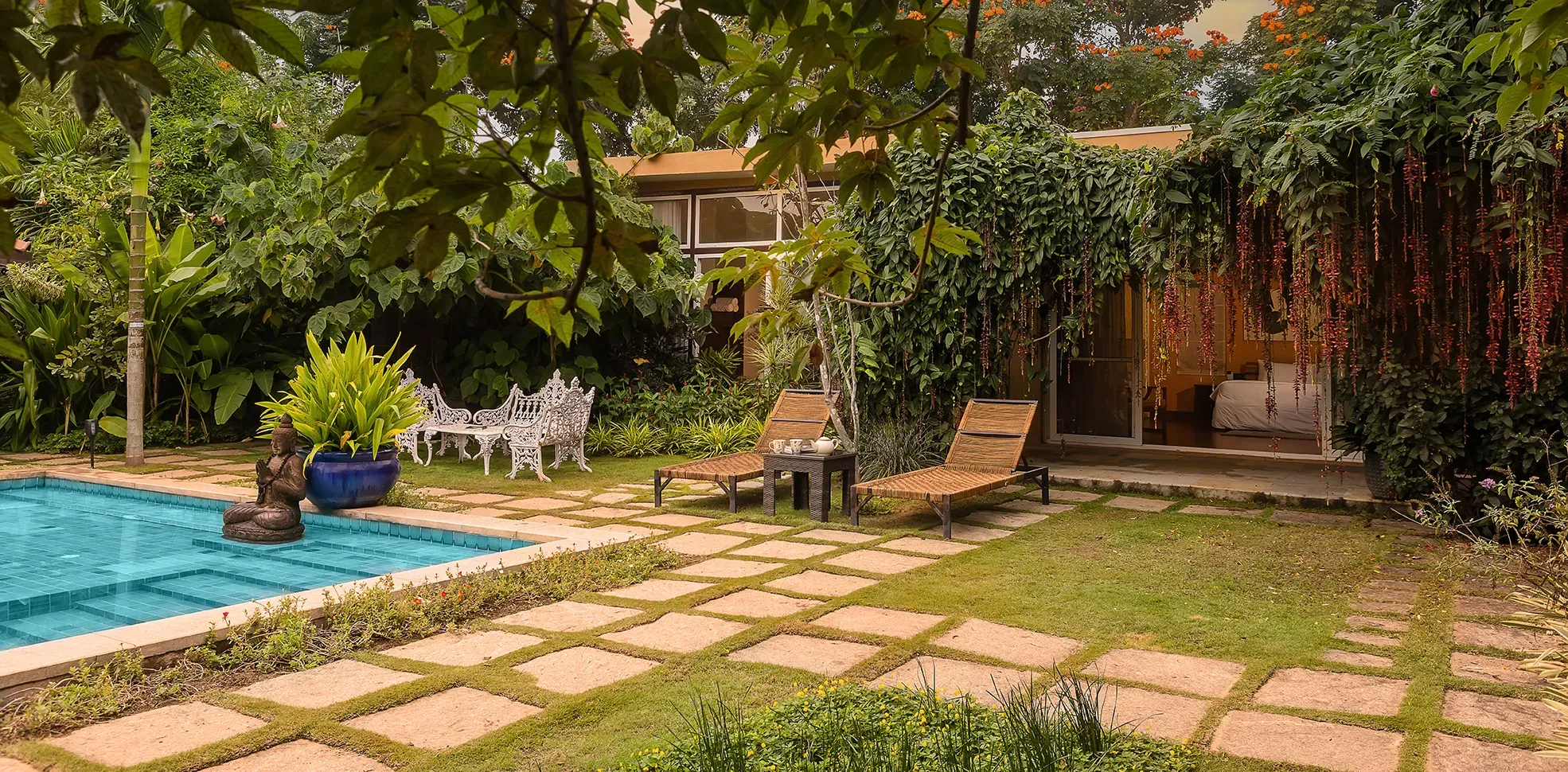
The food at Orchid Tree is not a service you consume between the pool and the steam room. It is part of why people come back. A plated lunch on the veranda after a morning walk, a slow dinner while the farm quiets down around you, these are the meals guests remember in a way that buffet trays simply do not produce. You can read more about, and see how the kitchen is set up before you arrive. If you are thinking about where you stay, most guests find that choosing the room and planning the meals at the same time makes the whole trip feel settled rather than improvised.
The estate is forty-five minutes from Whitefield. That is close enough for a day visit, but the dining model is designed around a stay. Pre-ordering works best when you have arrived and had time to settle. A meal eaten slowly, without anywhere to be, is a different thing from the same food eaten in a hurry. That is the version the kitchen is cooking for.
